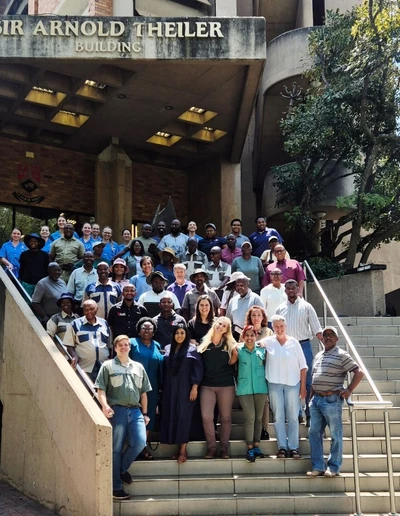
At the Farmers Day at Onderstepoort, IOSAR shared its research on keeping irrigation water and fresh produce safe.
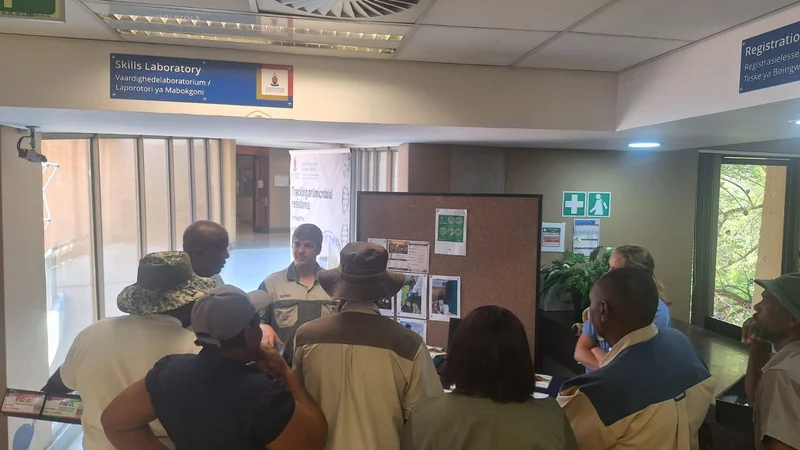
World Food Day 2026, held under the theme “Innovate today. Nourish tomorrow,” provided a timely platform to discuss how practical innovation can strengthen food safety. As part of the programme, the IOSAR project contributed insights from ongoing research on antimicrobial resistance (AMR) along the water–soil–plant–food pathway.
Dr Loandi Richter-Mouton presented From Dam to Dinner Plate: Keeping irrigation water and fresh produce safe. The talk explored how irrigation water, particularly surface water from dams and rivers, can carry microbes, including antimicrobial-resistant bacteria, onto crops and into communities. Drawing on work in South African and UK poultry–crop systems, she highlighted patterns of contamination observed across water, soil, poultry litter, fresh produce, and associated wastewater. Early findings show that resistant organisms and resistance genes move along this continuum, with wastewater effluent and poultry litter emerging as potential hotspots.
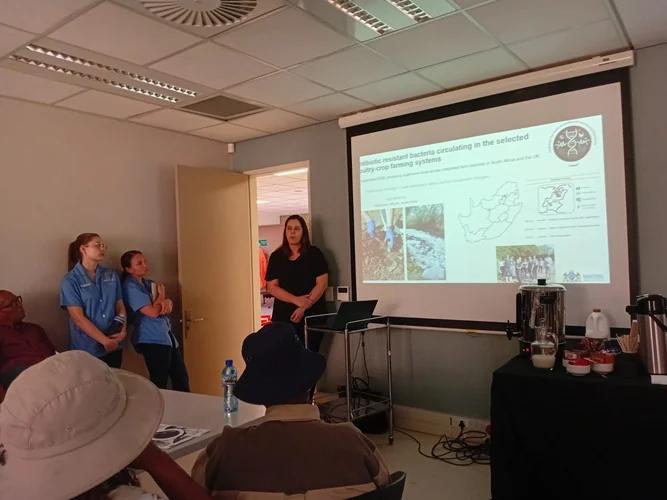
A central message was the value of multi-barrier risk management. No single measure eliminates microbiological risk, but layered, practical steps — such as careful manure and litter management, protecting water sources, maintaining farm hygiene, handling produce carefully, and keeping simple records — can meaningfully reduce contamination. These actions do not require expensive technology; they rely on knowledge, consistent practice, and support.
Science communication and direct engagement with farmers sit at the heart of IOSAR’s approach. Farmers’ daily decisions about water use, manure application, and hygiene directly influence the safety of the food that reaches markets and households. By working with farmers rather than only reporting findings, IOSAR aims to ensure that evidence supports real risk reduction on the ground.
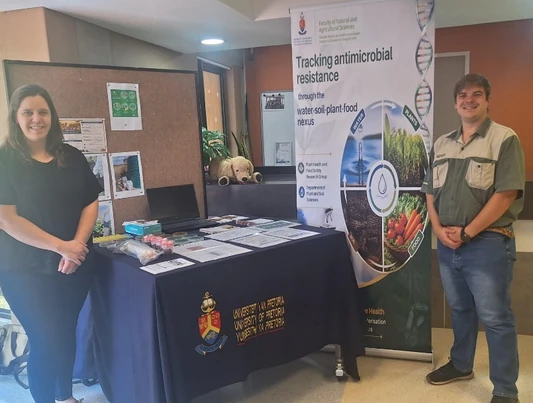
The contribution also formed part of the Farmers Day at Onderstepoort, where colleagues from the Faculty of Natural and Agricultural Sciences connected with veterinary and related expertise. This cross-disciplinary setting reflected the One Health nature of the work — linking plant sciences, animal health, environmental microbiology, and food safety in a broader conversation.
PhD student Sheldon Viviers was included in the programme, highlighting the role of early-career researchers who bridge laboratory methods (culture, metagenomics, and high-throughput qPCR) with the practical realities of farming systems.
IOSAR continues to build evidence on how AMR moves through poultry–crop systems while supporting practical, context-appropriate tools for farmers and stakeholders. All findings shared remain preliminary and part of ongoing research.